Start-ups really aren't that new…
We rightly celebrate the successes of our modern-day entrepreneurs, battling their way through fundraising, traversing multiple valleys of death and, occasionally, emerging with worldwide success and fame.
In reality, of course, there is nothing particularly new about entrepreneurship.
People have been persuading investors to back uncertain ventures, challenging conventional wisdom, miscalculating markets, protecting their ideas from competitors and discovering that the eventual product bears remarkably little resemblance to the original business plan for centuries.
So what would happen if we analysed some of history's entrepreneurs as though they were modern-day start-up founders?
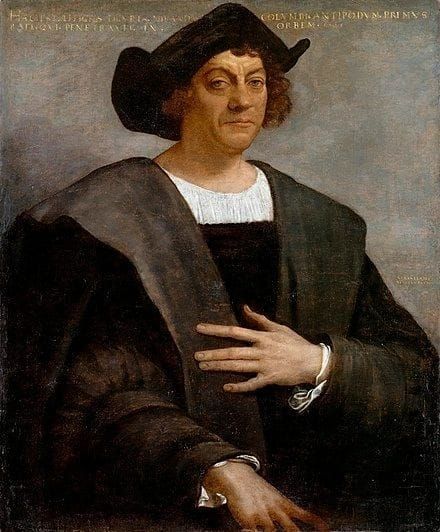
Christopher Columbus seems a reasonable place to begin.
Whatever else we might say about Columbus and the enormous consequences of his voyages, his 1492 expedition had many of the ingredients a modern entrepreneur would recognise: a bold proposition, sceptical investors, repeated rejection, questionable financial assumptions, formidable execution risk and founders demanding a rather substantial share of the upside.
So, if we'd had the opportunity to examine his business plan before he set off, perhaps we might have written something like this.
TARGETED DELIVERY DATE: FEBRUARY 1492
Christopher Columbus
Valladolid
Castile
Crown of Castile
Dear Chris,
Congratulations on getting your start-up funded!
I know how hard it is to close a first investment round like that. It's like herding cats, right? And those Angel investors are such prima donnas. It's like they think they are royalty or something! Oh, I see. I guess in your case they really are.
It's amazing how some people just don't have the vision. Kings of Portugal and England struggle with seeing the big picture. Smart move of yours to wait until all that fighting by Ferdinand and Isabella had finished before making your final pitch. Timing is everything in these situations. And you've got to know when to step back from the table as well. Pretending to go off and look for other backers made them even hungrier. Great that you closed the investment from Queen Isabella. Nice to see girl power is alive and well in the fifteenth century!
I've been looking through your business plan, though, and actually I do have a few questions.
1. Your numbers
So, as I understand it, the plan is to sail west rather than east in order to find a quicker route to Asia, saving the need to sail around Africa.
Assuming your plan works, I presume your unique selling point would therefore be a reduction in shipping costs and journey times for all those valuable goods? Time is money, as they say. But I do have some concerns about your projections for the length of the voyage.
2,300 miles seems pretty short.
I know this is based on your estimate of the circumference of the Earth. And you, and most of your educated contemporaries, already know the Earth is round, so none of this flat-Earth nonsense.
However, I'd advise you to read up on that chap Eratosthenes. His estimates from more than 1,700 years ago seem reasonably sound and are considerably larger than yours. That's quite a difference to hide somewhere in the assumptions column of the spreadsheet.
2. Protecting the IP
I'm also a little worried about how you prevent competitors getting in on the action. Won't the route rather quickly become public knowledge?
I see that you plan to have all the sailors sign Non-Disclosure Agreements to protect your Intellectual Property. There may be a couple of flaws in that approach. First, at least in England, many fifteenth-century sailors would struggle with the paperwork.
Second, and maybe it's different in Italy and Spain, but here in England if you take a random sailor down the Dog & Duck, ply him with a few pints of the landlord's finest ale and mention the word florin a couple of times, he'll probably tell you whatever you want to know.
I wouldn't build too much of the competitive moat around the NDA strategy.
3. The term sheet
Your investment terms are unusual too.
I like the fact that you get a ten per cent cut of the merchandise and first option on buying into follow-on commercialisation at a discount. But what's this about becoming governor and overlord of any new lands?
I wonder whether that might be a bit distracting. Building communities is a specialist skill and very different from being an entrepreneurial risk-taker. How broad is your leadership team? Do you have these roles covered? I'd recommend making sure the team is as diverse as possible. Don't make that old mistake of keeping everything in the family. It can lead to disaster.
I know you want to be bold, but retain a cautious edge too. You don't want to be so far out in front that you're like the cowboy getting the arrows in his back.
Hmm. Perhaps that analogy won't make much sense to you yet. A bit cart before the horse.
Anyway, I wish you well as you prepare to launch v1.0 of the solution: your first voyage west.
Remember that many start-ups eventually end up doing something rather different from what was initially planned. Much depends on what they discover once version 1.0 encounters the real world.
So keep an open mind about what you find out there. It may be rather different from what you expect.
All the best,
Henry
P.S. Oh, and try to make sure you're seen as the first. If you happen to come across any Viking artifacts, I'd keep that quiet.
No point scaring the investors unnecessarily.
So what can entrepreneurs learn from Columbus?
The joke, of course, is that translating Columbus's expedition into the language of start-ups doesn't require quite as much translation as we might expect.
There are at least three things worth taking away.
1. You can be wrong and still succeed
Columbus's assumptions about the journey were badly wrong.
Yet the voyage still produced an extraordinary outcome, just not the one described in the original proposition.
Entrepreneurs occasionally discover something similar.
A flawed hypothesis doesn't necessarily produce a failed venture, provided you're willing to recognise what you've actually discovered.
2. Investors aren't simply investing in the spreadsheet
An ambitious venture combines numbers, judgement, personalities, timing, risk and the possibility of an outsized prize.
The terminology may change.
The basic problem doesn't.
Someone still has to persuade somebody else that an uncertain future is worth investing in.
3. The first version is rarely the final destination
Modern entrepreneurs call it a pivot. Columbus thought he was heading for Asia. History might reasonably describe that as one of the more consequential pivots ever undertaken.
And perhaps that's the larger point. We tend to look at historical events knowing how everything turned out. The people living through them didn't have that luxury.
They were raising money, making assumptions, taking risks and trying to work out what to do next.
Rather like us.
The original letter to Christopher Columbus appears in Letters to Dead People, written by Henry Nash and Ivor Share.
Explore Letters to Dead People →
Lessons From History
One story from the past. One thought about the world today.
If you enjoy looking at the present through the occasionally illuminating lens of the past, you can subscribe to Lessons From History.
Subscribe to Lessons From History →